


Latest news with #knee replacement

Daily Mail
 18 hours ago
- Health
- Daily Mail
Faulty NHS knee implants left thousands in agony and unable to work... now experts reveal a new shocking twist in scandal and the other implants that face safety questions
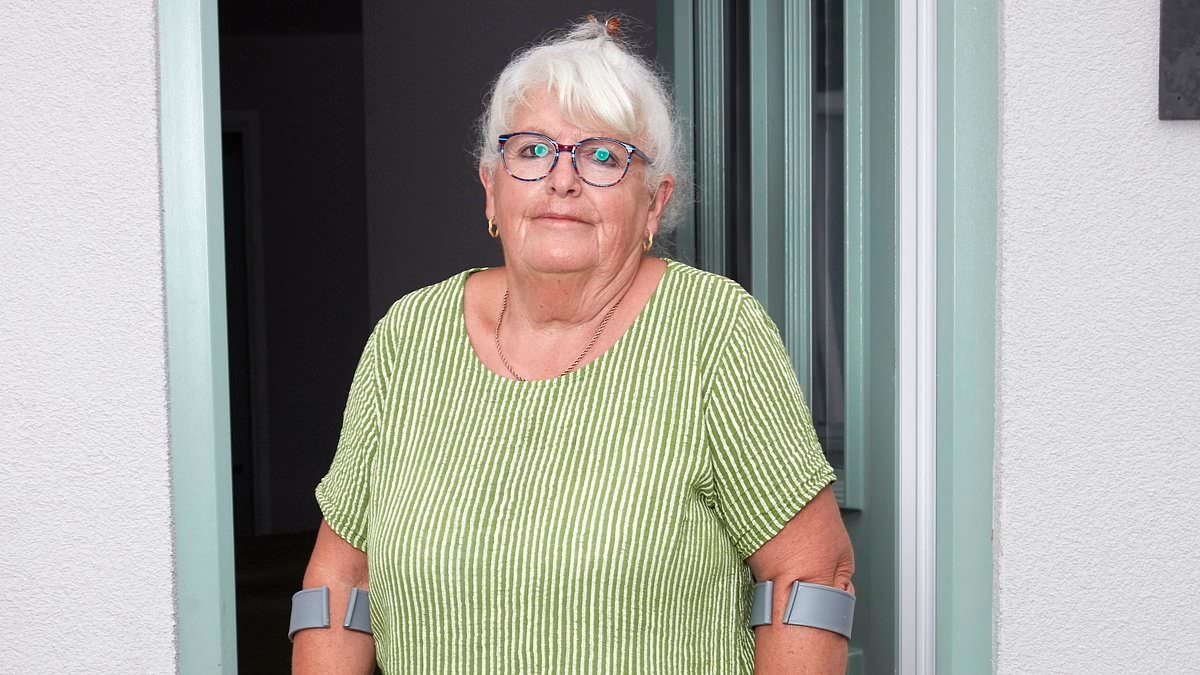
Having spent three years in pain and unable to lead her normal, active life, Gillian Bodell felt reassured when she went to see a private orthopaedic surgeon about her upcoming knee replacement surgery in 2022. 'He said I'd be back to normal again within six weeks,' says Gillian, 62, a retired police officer, who lives with her husband Martin, 67, also an ex-policeman, in Dordon, Warwickshire.
Daily Mail
12-08-2025
- Health
- Daily Mail
NHS launches review after more than 10,000 knee replacement patients were fitted with a potentially faulty implant that left many immobile and addicted to painkillers
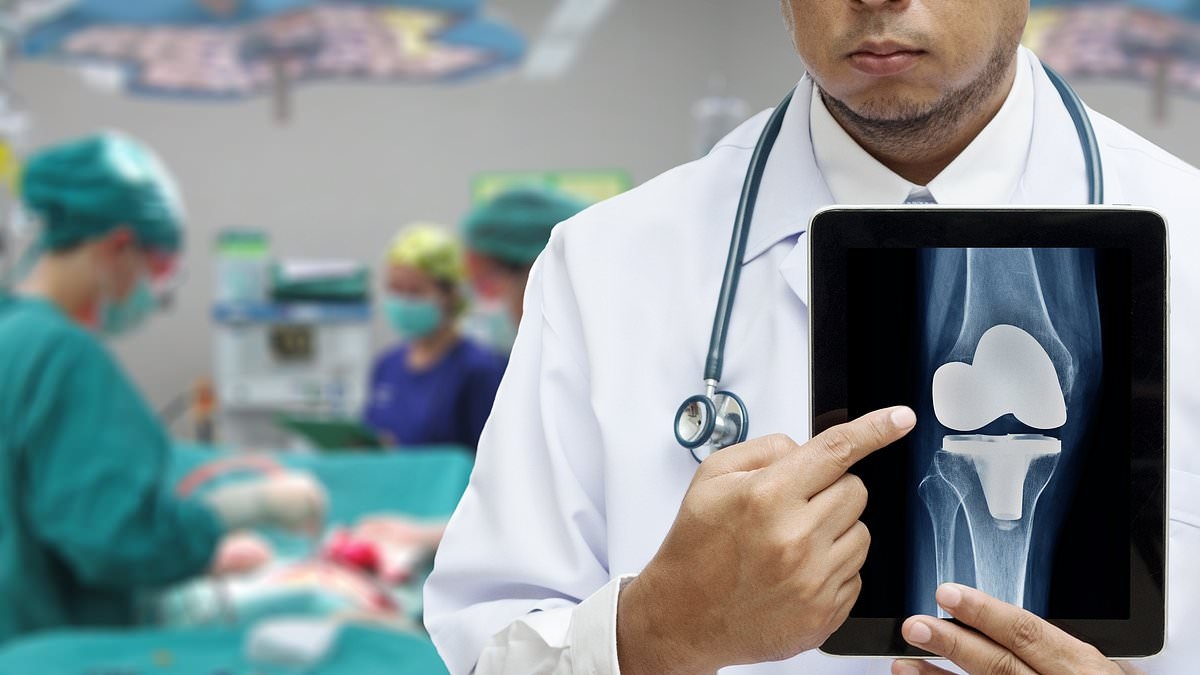
The NHS has launched a review after more than 10,000 knee replacement patients were fitted with a potentially faulty implant. The part failed up to six-times more often than would usually be expected, leaving some people immobile and addicted to painkillers. Now an investigation has revealed the product - made by US firm Zimmer Biomet - was only recalled eight years after concerns were first raised about its reliability. Hundreds of people needed a second operation after the implant slipped out of place, with each revision costing the NHS £10,000 to £30,000 a time. All patients fitted with the problematic implant should now have been recalled for a review by the hospital where they first had their operation. But experts say it is likely more will need follow-up care as further problems come to light, with the total bill estimated to run into millions of pounds. Leading knee surgeon Professor Leela Biant said action was not taken quickly enough after problems arose. She told BBC's File on 4 programme: 'The issue is their initial reluctance to acknowledge a problem and to not really engage with a process to evaluate these patients until they got to a situation where they had to.' Debbie Booker, from Southampton, told how the knee replacement she had at a local NHS hospital in 2016 initially felt like it was a success but a year later she was suddenly 'in agony'. The care home company manager said she had to take powerful painkillers to cope with the pain, adding: 'I was on fentanyl and morphine. I was actually addicted to morphine and it took me a long time to actually come off the morphine because I was addicted.' Medics found the implant had slipped out of place and she needed revision surgery. Debbie has since had a second knee replacement but the problems caused by the initial failed implant have caused long-lasting health problems. 'It's put my whole body out of alignment, I walk with a limp,' she said. She is now awaiting a hip replacement as a result. Another patient, known only as Diana, described how within three years of her left knee replacement surgery she went from being an active retiree to being sofa-bound. 'Every time I stood up I was standing on a broken leg and it was agony,' she told the programme. It also impacted surgeons who used the implant during their operations. One described how they became a surgical 'outlier', with higher revision rates than expected, after using the implant. The National Joint Registry (NJR), which keeps a record of implant surgery across England, Wales and Northern Ireland, first identified issues in 2014. But the Medicines and Healthcare products Regulatory Agency (MHRA) and Zimmer Biomet did not issue a recall until 2022. That year the NJR estimated that patients were nearly twice as likely to need corrective surgery after receiving the affected implant. Other peer-reviewed studies put the failure rate at 6 per cent to 19 per cent, compared with an expected rate of 3 per cent. A standard total knee replacement has four parts – a femoral component, tibial tray, patellar component and a polyethylene insert. Concerns were raised about the tibial part – also known as 'NexGen Stemmed Option Tibial Component' – as experts found it was linked to higher revision rates compared to other models when it was paired with certain other knee replacement components. In June 2022, a study was published in the journal Bone & Joint Open which suggested 'there is a fundamental issue with this NexGen implant design'. Local NHS teams are responsible for reviewing and, where clinically necessary, replacing affected implants. A spokesperson for NHS England said: 'The safety of patients is the absolute priority for the NHS. 'Where issues are identified with any medical device, local NHS teams work swiftly to assess patients and provide replacement treatment where clinically necessary, in accordance with recommendations from the MHRA and device manufacturers. 'NHS England is currently reviewing the case involving Zimmer Biomet NexGen knee implants.' Zimmer Biomet said in a statement: 'Zimmer Biomet is committed to the highest standards of patient safety, quality, and transparency. 'We issued the Field Safety Notice (FSN) proactively and voluntarily, in consultation with the MHRA, after new UK National Joint Registry (NJR) data indicated the Stemmed Option tibial component was not performing as well when used in combination with two specific femoral components (LPS Flex Option and LPS Flex GSF Option) compared to other combinations of components for which the NJR holds data. 'The vast majority of patients had positive outcomes, and we acted swiftly and responsibly by removing the tibial component from the market to prevent future use in those combinations. 'Zimmer Biomet meets all relevant regulatory requirements and maintains a robust post-market surveillance program. 'All our products are approved in accordance with the relevant regulations, and we continuously monitor the performance of our products once they are available to surgeons. 'Patient safety, transparency, and clinical excellence remain our highest priorities.' Zimmer Bionet did not respond when File on 4 asked if it would be contributing to the cost of the corrective operations. But the programme has seen a confidential company email, sent in 2022, telling sales staff to say that 'Zimmer Biomet will not cover diagnostic, follow-up or revision costs up front'.
Yahoo
12-08-2025
- Health
- Yahoo
Review launched over reports of delayed response to faulty knee replacement part
Health officials have launched a review amid reports that action was not taken swiftly enough following problems with a knee replacement part. BBC's File on 4 reported patients were left immobile and addicted to painkillers due to issues with the joint replacement. Some medics have said they first started noticing issues with a part of a knee replacement made by American medical device company Zimmer Biomet around eight years ago. A product recall was not issued until December 2022. A standard total knee replacement has four parts – a femoral component, tibial tray, patellar component and a polyethylene insert. Concerns were raised about the tibial part – also known as 'NexGen Stemmed Option Tibial Component' – as experts found the implant was linked to higher revision rates compared to other models. A recall was led by the Medicines and Healthcare products Regulatory Agency (MHRA) in December 2022 after analysis of National Joint Registry data. Leading knee surgeon Professor Leela Biant said action was not taken quickly enough after problems arose. She told File on 4 that concerns were raised by herself and colleagues around eight years ago – five years before the product recall. 'The issue is their initial reluctance to acknowledge a problem and to not really engage with a process to evaluate these patients until they got to a situation where they had to,' she told the programme. In June 2022, a study was published in the journal Bone & Joint Open which suggested 'there is a fundamental issue with this NexGen implant design'. Patients have told the BBC about the impact on their lives. Debbie Booker, a manager for a company running retirement homes on the south coast, had a knee replacement operation at a local NHS hospital in 2016. Mrs Booker, from Southampton, described how it initially felt like the operation was a success but a year later she was suddenly 'in agony'. As a result of the pain she said she had to take powerful pain killers. 'I was on fentanyl and morphine. I was actually addicted to morphine and it took me a long time to actually come off the morphine because I was addicted,' she said. Medics found the implant had slipped out of place and she needed revision surgery. Another patient, known only as Diana, described how within three years of her left knee replacement surgery she went from being an active retiree to being sofa-bound. 'Every time I stood up I was standing on a broken leg and it was agony,' she told the programme. It also impacted surgeons who used the implant during their operations. One described how they became a surgical 'outlier', with higher revision rates than expected, after using the implant. File on 4 reported the implant had been used on 10,000 patients. Local NHS teams are responsible for reviewing and, where clinically necessary, replacing affected implants. A spokesperson for NHS England said: 'The safety of patients is the absolute priority for the NHS. 'Where issues are identified with any medical device, local NHS teams work swiftly to assess patients and provide replacement treatment where clinically necessary, in accordance with recommendations from the MHRA and device manufacturers. 'NHS England is currently reviewing the case involving Zimmer Biomet NexGen knee implants.' Zimmer Biomet has been approached for comment. The company told File on 4 in a statement: 'Zimmer Biomet is committed to the highest standards of patient safety, quality, and transparency. 'When new data becomes available, we act appropriately, responsibly, and in accordance with applicable regulatory requirements.'


The Independent
12-08-2025
- Health
- The Independent
Review launched over reports of delayed response to faulty knee replacement part
Health officials have launched a review amid reports that action was not taken swiftly enough following problems with a knee replacement part. BBC's File on 4 reported patients were left immobile and addicted to painkillers due to issues with the joint replacement. Some medics have said they first started noticing issues with a part of a knee replacement made by American medical device company Zimmer Biomet around eight years ago. A product recall was not issued until December 2022. A standard total knee replacement has four parts – a femoral component, tibial tray, patellar component and a polyethylene insert. Concerns were raised about the tibial part – also known as 'NexGen Stemmed Option Tibial Component' – as experts found the implant was linked to higher revision rates compared to other models. A recall was led by the Medicines and Healthcare products Regulatory Agency (MHRA) in December 2022 after analysis of National Joint Registry data. Leading knee surgeon Professor Leela Biant said action was not taken quickly enough after problems arose. She told File on 4 that concerns were raised by herself and colleagues around eight years ago – five years before the product recall. 'The issue is their initial reluctance to acknowledge a problem and to not really engage with a process to evaluate these patients until they got to a situation where they had to,' she told the programme. In June 2022, a study was published in the journal Bone & Joint Open which suggested 'there is a fundamental issue with this NexGen implant design'. Patients have told the BBC about the impact on their lives. Debbie Booker, a manager for a company running retirement homes on the south coast, had a knee replacement operation at a local NHS hospital in 2016. Mrs Booker, from Southampton, described how it initially felt like the operation was a success but a year later she was suddenly 'in agony'. As a result of the pain she said she had to take powerful pain killers. 'I was on fentanyl and morphine. I was actually addicted to morphine and it took me a long time to actually come off the morphine because I was addicted,' she said. Medics found the implant had slipped out of place and she needed revision surgery. Another patient, known only as Diana, described how within three years of her left knee replacement surgery she went from being an active retiree to being sofa-bound. 'Every time I stood up I was standing on a broken leg and it was agony,' she told the programme. It also impacted surgeons who used the implant during their operations. One described how they became a surgical 'outlier', with higher revision rates than expected, after using the implant. File on 4 reported the implant had been used on 10,000 patients. Local NHS teams are responsible for reviewing and, where clinically necessary, replacing affected implants. A spokesperson for NHS England said: 'The safety of patients is the absolute priority for the NHS. 'Where issues are identified with any medical device, local NHS teams work swiftly to assess patients and provide replacement treatment where clinically necessary, in accordance with recommendations from the MHRA and device manufacturers. 'NHS England is currently reviewing the case involving Zimmer Biomet NexGen knee implants.' Zimmer Biomet has been approached for comment. The company told File on 4 in a statement: 'Zimmer Biomet is committed to the highest standards of patient safety, quality, and transparency. 'When new data becomes available, we act appropriately, responsibly, and in accordance with applicable regulatory requirements.'
